Trends in Aviation Maintenance
Trends in Aviation Maintenance
The aircraft maintenance landscape in 2024 and early 2025 presents an interesting paradox born from the industry's post-pandemic recovery. While dramatic increased air traffic signals strong industry growth, it's creating ripple effects throughout the maintenance ecosystem(2). More aircraft in the skies means accelerated maintenance schedules, but this surge in demand is colliding with persistent supply chain challenges. For smaller maintenance operations, this creates a delicate balancing act between maintaining adequate parts inventory without tying up too much capital, especially when lead times are unpredictable and prices are volatile. Linkedin.com's post " The Growing Challenge of Spare Parts Shortages in the Aviation Industry" provides a good insight. Companies can improve their inventory management systems to mitigate parts shortages and build stronger relationships with vendors to secure priority services.

This supply chain pressure is further complicated by the growing emphasis on sustainability in aircraft maintenance. The industry is being pushed to adopt eco-friendly practices and materials at a time when simply maintaining regular operations is already challenging. However, this could be an opportunity in disguise. Adoption of sustainable maintenance practices like more efficient cleaning processes or longer-lasting materials could actually help offset some of the rising costs.
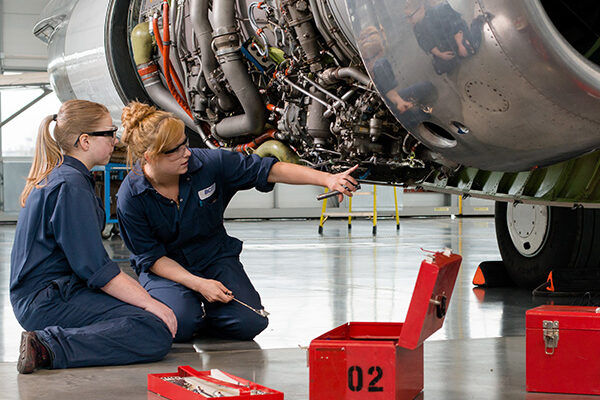
Speaking of expertise, the technical talent shortage might be the most critical challenge threading through all these trends. The pandemic's impact on the workforce has left a significant experience gap, just as the industry needs skilled technicians more than ever. Traditional recruitment methods aren't keeping pace with demand, suggesting it's time for more innovative approaches. What if maintenance operations developed deeper partnerships with educational institutions, starting as early as high school? Creating hands-on experiences with aircraft systems could spark early interest in aviation careers, helping build a pipeline of future talent. The good news is, some school districts are actively working on this idea to bring more students recently. As an instructor at BCIT, I am personally getting in touch with directors of maintenance from a few different employers to set up co-op program.
This talent challenge becomes even more pressing when we consider the industry's movement toward predictive maintenance as seen on Linkedin.com's earlier reference. The potential benefits are enormous - reduced downtime, better cost management, and enhanced safety. But implementing these sophisticated systems requires not just technical infrastructure but also expertise to interpret and act on the data. For smaller maintenance operations, this represents both an opportunity and a challenge in incorporating predictive technologies without overwhelming their current capabilities and resources.
All these factors play out against the backdrop of increased ground traffic at airports, where the risk of incidents rises with congestion. This operational challenge touches everything from maintenance scheduling to insurance costs. The integration of emerging technologies like augmented reality might offer solutions for safer aircraft movement in crowded conditions, blending traditional maintenance expertise with new technological tools.

Looking ahead, how might these interconnected challenges reshape the aviation maintenance industry over the next five years? The solution lies in developing integrated approaches that address multiple challenges simultaneously. As discussed, the adoption of predictive maintenance technologies could help offset the talent shortage by making existing teams more efficient. Similarly, sustainable practices could help solve supply chain issues by reducing dependence on hard-to-source parts through better maintenance practices and longer-lasting components. The key to success will likely be found in this kind of synergistic thinking - where solutions to one challenge create positive spillover effects for others.
Moreover, the industry might see the emergence of new business models that better address these multiple challenges. This could include maintenance networks that share resources and expertise, specialized training programs that combine traditional skills with new technology expertise, and innovative inventory management systems that help smaller operations maintain resilience against supply chain disruptions. The future of aviation maintenance will likely belong to those organizations that can successfully navigate these intersecting challenges while remaining adaptable to new developments in technology and sustainability.
References:
https://www.flyingmag.com/top-aircraft-maintenance-trends-for-2024/]
https://www.icao.int/Newsroom/Pages/Air-traffic-recovery-is-fastapproaching-prepandemic-levels.aspx]
https://www.oliverwyman.com/our-expertise/insights/2023/jan/not-enough-aviation-mechanics.html]
https://www.linkedin.com/pulse/growing-challenge-spare-parts-shortages-aviation-hmqhf/]


Comments
Post a Comment